Empowering Communities Through Medicinal Herb Cultivation
February 3, 2017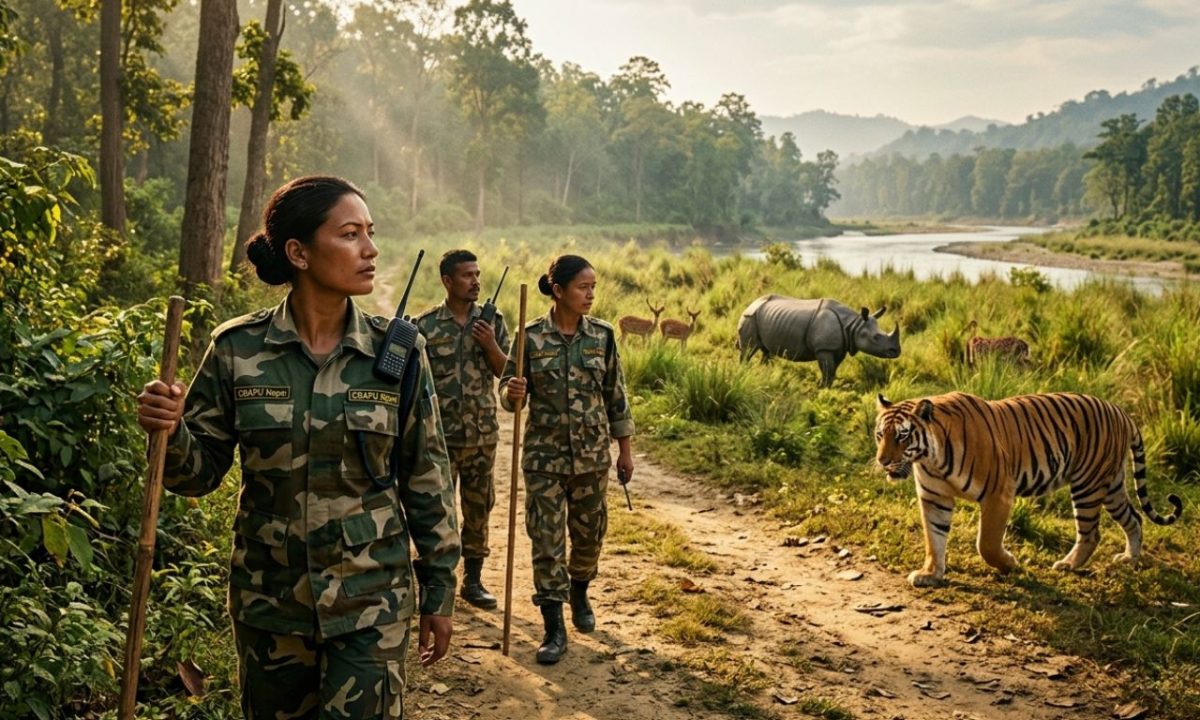
In the dense sal forests of Bardia National Park and the sprawling floodplains of Chitwan, a quiet revolution is happening. It isn’t led by high-tech drones or international military forces, but by local youth, farmers, and community leaders.
Community-Based Anti-Poaching Units (CBAPU) have become the backbone of Nepal’s conservation success. By shifting the role of local people from “bystanders” to “protectors,” these units have helped Nepal achieve historic milestones, including multiple years of zero poaching for rhinos and a doubling of the wild tiger population.
What is a Community-Based Anti-Poaching Unit (CBAPU)?
A CBAPU is a voluntary association of local community members, typically operating within the Buffer Zones of National Parks. In Nepal, there are now over 400 active units comprising thousands of dedicated volunteers (Froesch, 2021). These individuals dedicate their time to:
- Patrolling & Surveillance: Regular forest walks to deter illegal entry and hunting.
- Intelligence Gathering: Using local networks to identify potential poachers before they strike.
- Snare Removal: Finding and destroying traps meant for tigers, rhinos, and deer (Mahatara et al., 2018).
- Public Awareness: Educating neighbors about the long-term economic and environmental value of a healthy forest.
1. Drastic Reduction in Wildlife Crime
The primary impact of CBAPUs is the dramatic decline in illegal activities. Research shows that patrol frequency, rather than just the distance covered, is the most significant factor in reducing poaching (Mahatara et al., 2018).
Because community members live on the fringes of the park, they can maintain a constant presence that government rangers alone cannot achieve. This grassroots vigilance was a key factor in increasing Nepal’s rhino population by 21% between 2011 and 2015 (Mahatara et al., 2018).
2. A Haven for Endangered Species
The presence of CBAPUs has directly influenced the recovery of “charismatic megafauna” and smaller, often overlooked species.
- Greater One-Horned Rhinos: Through effective law enforcement and community participation, Nepal’s rhino population grew from an estimated 95 in 1968 to over 645 by 2015 (Martin, 2001; Mahatara et al., 2018).
- Royal Bengal Tigers: CBAPUs help protect critical habitats like the Khata Corridor, which connects Bardia National Park in Nepal to Katarniaghat Wildlife Sanctuary in India. This allows tigers to breed and disperse safely (Gurung, 2022).
- Aquatic Biodiversity: In areas like Beeshazari Lake, CBAPU activities protect up to 17 fish species and one of the largest populations of Mugger crocodiles (Lamichhane et al., 2020).
3. Beyond Protection: Addressing Human-Wildlife Conflict
Conservation is only sustainable if the local community feels safe. As wildlife populations grow, human-wildlife conflict increases. Residents—particularly women who enter the forest to collect fodder—face heightened risks of encounters with tigers and leopards (Rauniyar, 2026).
CBAPUs play a vital role here by:
- Assisting in Wildlife Rescue: Helping safely relocate animals that stray into villages.
- Rapid Response: Being the first on the scene after an attack to provide support and report incidents for compensation.
- Mitigation: Implementing tools like electric fencing and predator-proof pens for livestock (Darwin Initiative, 2007).
4. The Socio-Economic Ripple Effect
By protecting biodiversity, CBAPUs are indirectly fueling the local economy. A healthy National Park attracts ecotourism, which provides jobs for nature guides, lodge owners, and artisans. This creates a “circular economy” where conservation leads to profit, which in turn motivates further conservation (Froesch, 2021).
The Road Ahead: Challenges and Hope
While the success of Nepal’s CBAPUs is a global blueprint, challenges remain. Issues like poverty, unemployment, and the need for more technical training for volunteers persist (Lamichhane et al., 2020).
However, the core lesson is clear: Biodiversity thrives when the people living alongside it are empowered to protect it. Through the tireless efforts of CBAPU Bardia and units across the country, Nepal continues to prove that humans and the wild can flourish together.